
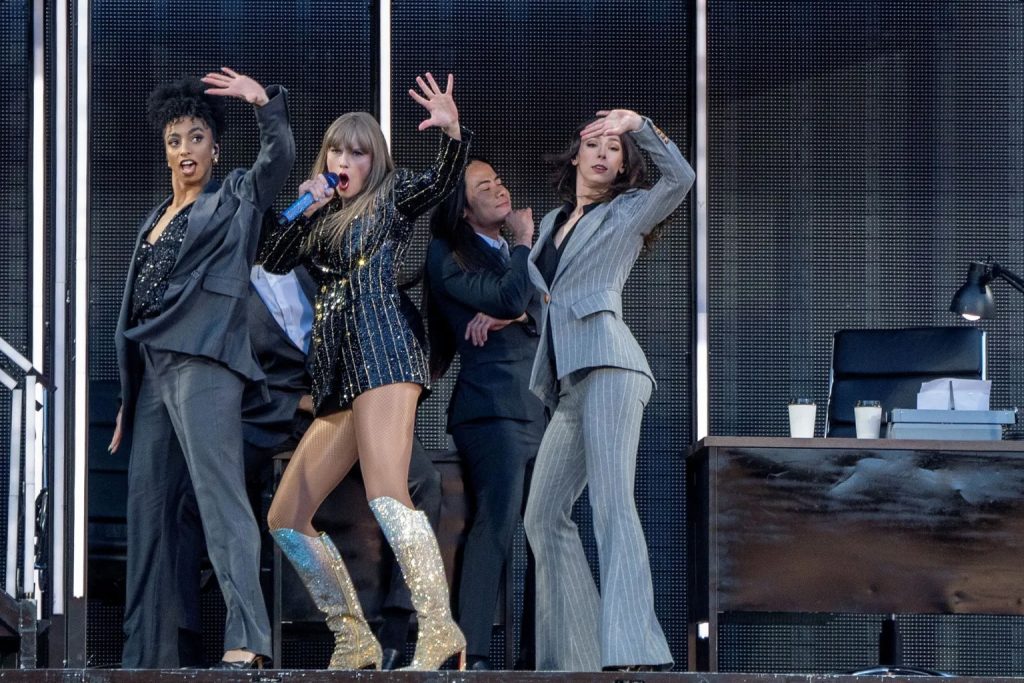
Taylor Swift is not just a musical phenomenon; she is a business unicorn. Her Eras Tour, which recently arrived in Edinburgh, is pushing her wealth well above $1 billion (£785.51m). According to Forbes, she is worth $600 million (£471m) from her performances and back catalogue, with an additional $125 million (£98.2m) in real estate.
Unlike other musicians who have diversified their earnings through various ventures, Taylor Swift mints money through astute leverage of her market power, a phenomenon known as “Swiftonomics.” She reportedly demands more than 100% of gross ticket sales, leaving promoters to profit from food, drink, and extras. By doing multiple nights at one venue, she reduces touring costs and attracts fans in large numbers, often from great distances.
Swift’s financial savvy is part of her appeal. She famously took on Apple and Spotify over royalty payments, winning both battles. Harvard Law School uses her as a case study in negotiating power, emphasizing her ability to turn her back on unfavorable deals because of her myriad of eager negotiating partners.
At 34, Swift has become very rich by dictating terms to music industry bosses and selling to her fan base, who adore her for it. After selling the rights to her earlier recordings to an investment company, she re-recorded her albums, persuading fans to buy the new versions as the definitive collector’s items. Fans have complied, preferring the re-records over the originals by a ratio of 4:1.
Swift’s influence extends beyond streaming. The resurgence of vinyl records has brought them back into the basket of commonly-purchased goods for inflation surveys, and Swift commands a sizeable share of that market, often selling to people without turntables who collect for the artwork.
Is Swift a one-off? Possibly. Scots author Will Page, a former chief economist at Spotify, believes she has skillfully captured opportunities arising from industry disruptions. Page notes that she has raised the bar for what an artist can achieve in the complex value chain of music, both from streaming and ticket sales.
The music industry has evolved significantly with digital streaming, which replaced sales of physical media like vinyl, cassettes, CDs, and DVDs. This shift has concentrated market power in a few platforms, with Spotify alone receiving 120,000 tracks uploaded daily. While the industry is making more money, it now has more creators to support, with nine million on Spotify alone.
Streaming offers artists a higher proportion of earnings from downloads compared to CDs. It also makes it easy to reach fan bases globally, although it has led to a decline in the dominance of English-language music. Local musicians now dominate the top-streamed tracks in many countries.
Live performance has become a more significant revenue source post-pandemic, with fans willing to pay higher ticket prices. In the UK, live music revenue increased by 22% in 2022, despite fewer gigs. This shift has focused more revenue on big artists in large venues.
The industry is also seeing significant investment in back catalogues. Taylor Swift embraced this trend but faced challenges when she lost control over her recordings. For older and deceased performers, selling back catalogues has become a lucrative market.
In 2020, Universal Music Group invested over $1 billion in back catalogues, including Bob Dylan’s. This trend reflects the growing value of music assets and the increasing involvement of big finance in the industry.
Taylor Swift’s approach and success illustrate the evolving dynamics of the music industry, where strategic market leverage, digital streaming, and live performances are key to financial success. Her ability to navigate these complexities sets a benchmark for other artists aiming to thrive in this ever-changing landscape.
Sharing is caring!