
DAKAR, Senegal Oct 31 – Artificial intelligence is increasingly finding its way into Africa’s hospitals, classrooms and farms, offering new possibilities for addressing challenges that have constrained development across the continent.
From helping healthcare workers identify potentially life-threatening conditions to enabling children to learn in their mother tongues and supporting farmers to improve agricultural productivity, innovators are exploring how the technology can be adapted to Africa’s unique needs.
But as artificial intelligence rapidly transforms industries and economies around the world, questions are emerging about whether Africa will be able to harness its potential or risk becoming a consumer of technologies developed elsewhere.
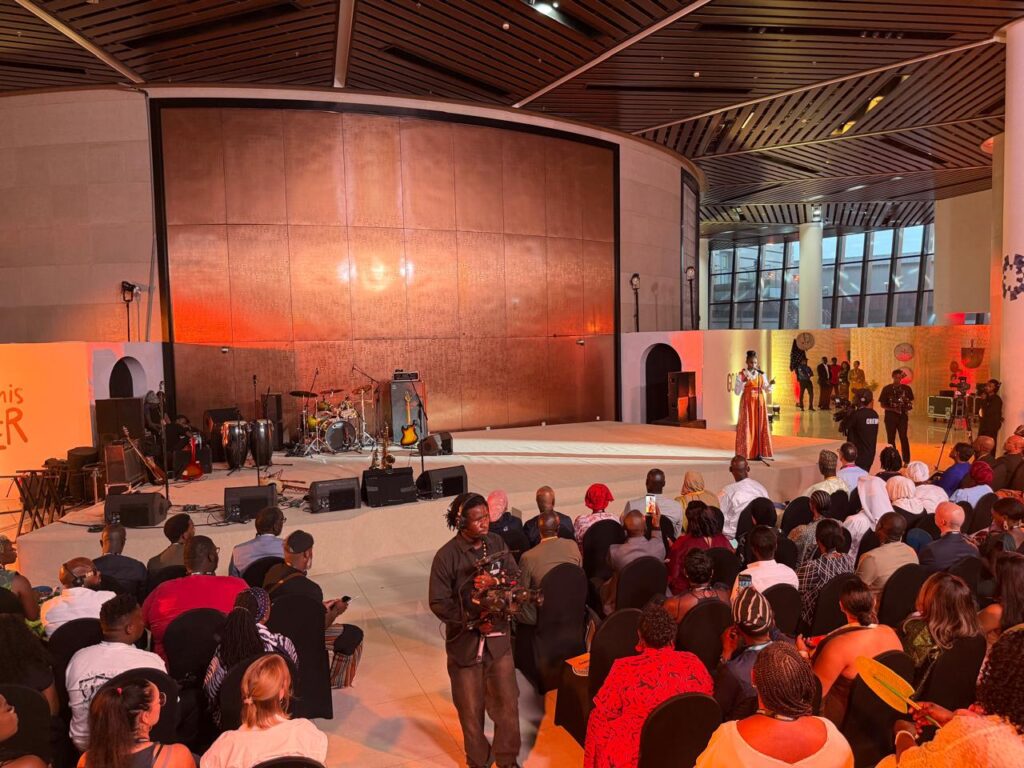
This was the central conversation at the Gates Foundation’s Goalkeepers 2026 gathering in Dakar, Senegal, where African innovators, policymakers, development practitioners and global technology stakeholders came together to examine how AI can accelerate progress while ensuring that its benefits reach underserved communities.
Held on October 29 at the Museum of Black Civilisations, the event marked the first time the foundation’s Goalkeepers gathering was hosted in Dakar.
Under the theme, “Make This Matter: AI, Equity, and the Choice We Can’t Delay,” the gathering explored how artificial intelligence could expand opportunities in healthcare, education and agriculture while addressing inequalities that threaten to exclude millions of people from the emerging digital economy.
The discussions highlighted a growing recognition that Africa’s participation in the AI revolution must go beyond adopting existing technologies. The continent must also invest in developing solutions that reflect its languages, cultures, economic realities and development priorities.
AI AND THE FUTURE OF AFRICAN HEALTHCARE
Healthcare emerged as one of the most compelling areas where artificial intelligence could make a difference, particularly in strengthening primary healthcare systems and supporting frontline professionals.
Across Africa, healthcare workers often operate in facilities facing shortages of personnel, equipment and specialised services. In such environments, AI-enabled tools could help improve diagnosis, identify potential medical complications and support clinical decision-making.
The experience of Vyonne Njeri, a clinical officer at Kenya’s Penda Health, demonstrated how the technology is already being applied in a real healthcare setting.
Njeri shared how an AI-powered system known as AI Consult, integrated into digital patient records, helped flag a potentially serious medical condition in a four-month-old baby who had been brought to the clinic with a fever and a runny nose.
The system identified elevated respiratory and heart rates, prompting further examination and a referral for screening. Subsequent investigations revealed a congenital heart defect.
For Njeri, the experience demonstrated how artificial intelligence could provide healthcare professionals with an additional layer of support, helping them identify potential clinical oversights.
She said her initial concerns that AI could eventually replace healthcare workers had changed as she experienced its practical applications.
“AI is not perfect, and that is why it must never take over clinical judgement. It will make mistakes; I have seen that first-hand when it was first introduced,” she said.
“We still need trained healthcare workers, we still need accessible clinics, we still need people who trust us to take care of them. I am the primary healthcare provider at the frontline, but AI has my back, and this support helps me focus on what is most important – the people.”
Her account illustrated the importance of positioning AI as a tool that strengthens the capacity of healthcare professionals rather than replacing human expertise.
For African countries seeking to expand access to quality healthcare, the technology presents opportunities to support early detection, improve the management of patient information and extend specialist knowledge to underserved communities.
However, its effectiveness will depend on reliable infrastructure, responsible deployment, data protection and the availability of trained professionals to oversee its use.
WHY AFRICA’S LANGUAGES MUST BE PART OF THE AI REVOLUTION
While healthcare highlighted the potential of AI to improve medical services, the gathering also examined a fundamental challenge that could determine how inclusive the technology becomes across Africa – language.
Mamadou Ly, Executive Director of Associates in Research and Education for Development (ARED), shared how children in Senegal who grow up speaking local languages often struggle when they begin formal education in French.
For many learners, the transition means having to understand new subjects in a language they may not speak or understand fluently, creating barriers to participation and learning from the outset.
To address this challenge, ARED piloted an initiative that allowed children to receive instruction in Wolof, one of Senegal’s most widely spoken languages.
Ly said the results demonstrated the potential of mother-tongue instruction to improve children’s understanding and engagement with learning.
The initiative subsequently informed Senegal’s Ministry of Education’s bilingual education strategy.
ARED is now exploring how artificial intelligence can build on this progress by developing tools in local languages to support children’s learning and help teachers deliver lessons more effectively.
Ly argued that the limited representation of African languages in existing AI systems could leave millions of people unable to benefit fully from the technology.
“The languages that are going to help children succeed in their education are not present in the AI systems. If we want to have AI that is inclusive, we need to create it through our language, our history, and our local context,” he said.
His concerns reflect a wider challenge across Africa, where linguistic diversity presents both an opportunity and a significant technical hurdle for the development of inclusive AI applications.
The continent’s thousands of languages remain unevenly represented in digital datasets and artificial intelligence systems, raising questions about whose knowledge, experiences and cultural contexts are reflected in the technology.
Developing AI tools that recognise local languages could transform access to education, healthcare information and public services, particularly for communities that have traditionally faced barriers to digital inclusion.
AFRICAN INNOVATORS DEVELOP SOLUTIONS TO LOCAL CHALLENGES
The Dakar gathering also provided a platform for young African entrepreneurs and innovators to demonstrate how homegrown technologies can address practical development challenges.
One of the highlights was the “Qui Veut Changer Le Monde?” showcase, a Dragons’ Den-style competition that brought together young innovators to pitch their ideas before a panel of judges.
Three initiatives – Mosaan Health, MBOSS and Makeda – presented solutions targeting healthcare, agriculture and education.
Mosaan Health showcased an AI-powered microscopy technology designed to support faster and more accessible disease diagnosis.
The innovation seeks to improve the use of microscopy in identifying diseases, with the potential to strengthen diagnostic services, particularly in settings where access to specialised laboratory expertise is limited.
MBOSS presented a smart irrigation system aimed at helping farmers conserve water and improve agricultural productivity.
Agriculture remains a critical source of livelihoods across much of Africa, yet farmers face mounting challenges associated with changing weather patterns, water scarcity and limited access to modern farming technologies.
Solutions that improve irrigation and resource management could help farmers make better decisions, reduce waste and strengthen food production.
The third innovation, Makeda, is a Senegalese reading application designed to help children learn French through their mother tongues, including Wolof, Sérère and Pulaar.
The three projects were assessed by a panel that included Fatma Samoura, the former FIFA Secretary General.
Mosaan Health emerged as the winner, highlighting the growing potential of African-developed technologies to address challenges in essential sectors.
The competition also underscored the importance of supporting young African innovators with investment, technical expertise and opportunities to scale their solutions beyond individual communities and national borders.
For a continent with a rapidly growing young population, nurturing local innovation could be an important part of building an economy that participates more actively in the global technology industry.
GATES FOUNDATION COMMITS $1 BILLION TO AI
The discussions in Dakar came against the backdrop of the Gates Foundation’s commitment to invest at least $1 billion over two years to expand access to artificial intelligence and AI-enabled solutions.
Announced in September 2026 alongside the release of its annual Goalkeepers Report, the investment is intended to support applications that can improve lives, particularly in healthcare, education and agriculture.
The 2026 report, titled Make This Matter: AI, Equity, and the Choice We Can’t Delay, outlines the foundation’s priorities for ensuring that technological advancement benefits populations that have traditionally been underserved.
The funding is structured around four priority areas, with 40 per cent allocated to education, another 40 per cent to healthcare, 10 per cent to agriculture and the remaining 10 per cent to digital foundations, including technologies and datasets supporting underrepresented languages.
In healthcare, the investment is expected to support innovations in diagnostics, clinical decision-making, maternal and newborn care, and research into medicines and vaccines.
In education, the focus includes AI-powered tutoring and tools that can help teachers personalise learning and improve classroom experiences.
For agriculture, the foundation is looking to support applications that provide farmers with advice tailored to their soil, weather and crop conditions.
The allocation towards digital foundations recognises that the development of inclusive AI requires more than software. It also needs reliable infrastructure, relevant datasets and systems capable of serving populations whose languages and experiences are poorly represented in existing technologies.
Bill Gates, chair of the Gates Foundation, has warned that the benefits of artificial intelligence will not automatically reach the people who need them most.
He said the foundation was established partly to address a situation in which people with the greatest needs often have the least influence over where innovation and investment are directed.
“AI presents the same challenge, only at much greater speed. AI could be used to improve lives and livelihoods on a large scale, but achieving this will require deliberate choices by governments and technology companies.
“We can harness AI for good. But it will not happen by accident,” he said.
The foundation argues that deliberate investment and collaboration will be necessary to prevent AI from reinforcing existing inequalities, particularly where access to technology, connectivity and digital skills remains uneven.
BUILDING AI CAPACITY IN AFRICAN HEALTH SYSTEMS
Part of the foundation’s broader effort to expand the application of artificial intelligence in healthcare is Horizon 1000, a $50 million collaboration with OpenAI beginning in Rwanda.
The initiative seeks to support the deployment of AI tools across 1,000 primary healthcare clinics, strengthening the capacity of frontline health workers and improving access to information and essential medical services.
The programme reflects growing interest in using artificial intelligence to support healthcare delivery in settings where medical professionals often work with limited resources.
For African countries, the potential applications extend from supporting clinical decision-making and patient management to improving health information systems and helping healthcare workers access relevant medical guidance.
However, the adoption of such technologies will require investment in digital infrastructure, appropriate regulation and safeguards to protect patient information.
It will also require ensuring that AI applications are adapted to local health systems rather than simply importing solutions designed for different healthcare environments.
AFRICA’S PLACE IN THE GLOBAL AI ECONOMY
Beyond the individual innovations showcased, the discussions in Dakar raised a broader question about Africa’s position in the rapidly expanding global AI economy.
The continent has a growing pool of young technology professionals, entrepreneurs and researchers, but many countries continue to face constraints associated with unreliable electricity, limited internet connectivity, inadequate digital infrastructure and insufficient investment in research and development.
These challenges could restrict the ability of African innovators to compete globally and develop technologies at the scale required to transform essential services.
There are also questions surrounding data protection, privacy, the reliability of AI-generated information and the potential impact of automation on employment.
As governments consider policies to regulate and encourage the adoption of artificial intelligence, they face the challenge of balancing innovation with public interest and ensuring that citizens are protected.
For businesses, the opportunity lies in investing in locally relevant solutions, developing partnerships and supporting technologies that can improve productivity across different sectors.
Educational institutions also have a significant role in equipping young Africans with the technical and critical thinking skills required to participate in an increasingly digital economy.
The gathering brought together voices from government, development, technology and the creative industries, including Oulimata Sarr, former Senegalese Minister of Economy, Planning and Cooperation; Youssou N’Dour, the legendary Senegalese musician and Grammy Award winner; and Fatou Jupiter Touré, a United Nations ambassador who hosted the event.
Their contributions, alongside those of health workers, educators and young innovators, reflected the growing intersection between technology, development and the future of African societies.
Ultimately, the examples presented in Dakar demonstrated that the success of artificial intelligence should not be measured only by technological advancement or the speed at which it is adopted.
Its real value will be determined by whether it improves access to healthcare, makes education more inclusive, strengthens agricultural production and creates opportunities for people across different economic backgrounds.
For Africa, the choices being made now will help determine whether the continent becomes an active participant in shaping the next generation of technology or remains dependent on solutions developed elsewhere.
The message from the Gates Foundation’s Goalkeepers gathering was that artificial intelligence presents an opportunity to accelerate development, but ensuring that its benefits reach ordinary Africans will require deliberate investment, local innovation and a commitment to equity.
Sharing is caring!