
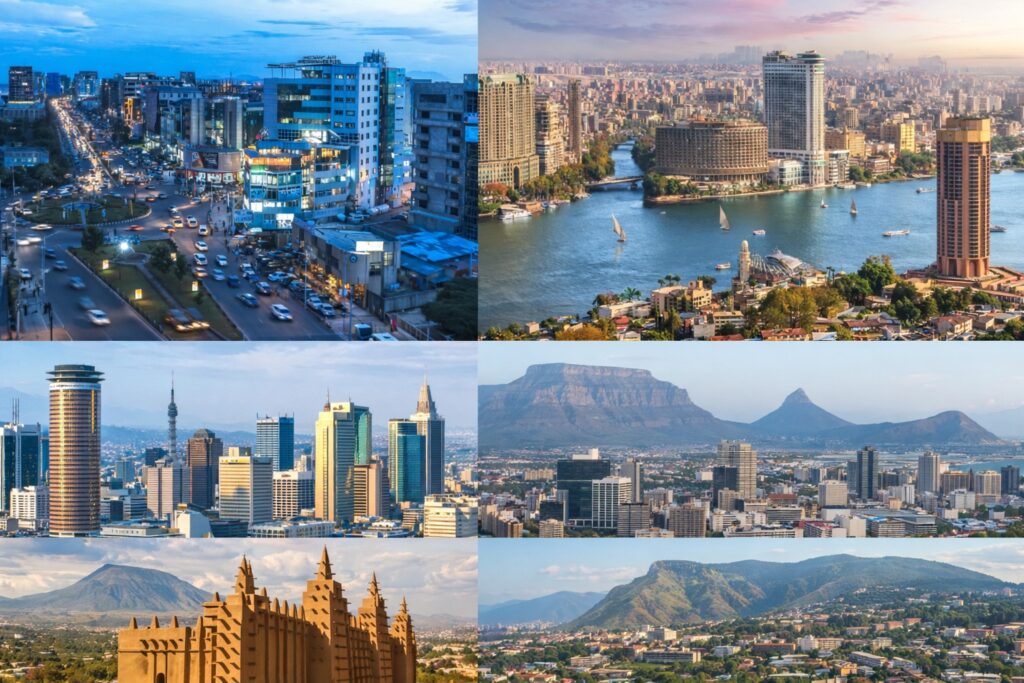
The start of 2026 finds Africa in a moment of unusual political alertness. Across the continent, citizens are paying closer attention to how power is exercised, how security is enforced and how economic promises translate into everyday life. This is not a season of collapse or revolution, but one of scrutiny—quiet in some places, confrontational in others, and unmistakably consequential.
What is changing is not simply who governs, but how governance itself is being judged.
In recent years, elections across Africa have continued with relative regularity, yet public confidence in political systems has not kept pace. Formal democratic rituals remain intact in many states, but legitimacy is increasingly being tested outside polling stations—on the streets, online and in everyday economic interactions. Younger Africans, in particular, are less willing to accept authority that does not explain itself or deliver tangible outcomes.
This shift is visible in the nature of recent protests and civic actions across regions. Many are not driven by opposition parties or organised movements, but by loosely connected citizens mobilised around shared grievances: rising living costs, lack of employment, police conduct, corruption and perceived arrogance within political leadership. These actions are often spontaneous, decentralised and difficult to contain within traditional political frameworks.
For governments, this has created a dilemma. The instinct to prioritise order and control remains strong, especially where states fear instability. Yet heavy-handed security responses—mass arrests, restrictions on assembly, internet shutdowns and opaque policing—have often deepened public resentment rather than restoring calm. Stability enforced without consent has proven fragile.
As 2026 begins, African states face a central governance challenge: how to manage dissent without criminalising citizenship.
Economic pressure is a major driver of this tension. While several African economies show signs of recovery following global shocks, the lived experience of many citizens tells a different story. Food prices remain high, currencies volatile and public services stretched. For millions working in the informal sector, economic resilience at the macro level offers little reassurance.
This gap between economic indicators and household reality is politically potent. Citizens are increasingly sceptical of growth narratives that do not address affordability, access and opportunity. In many contexts, economic policy is now evaluated not by expert endorsement, but by whether it reduces daily vulnerability.
Security, meanwhile, has become a defining governance fault line. Across the continent, policing and military institutions are under heightened scrutiny—not only for their effectiveness, but for their conduct. Allegations of abuse, lack of accountability and politicisation have complicated the relationship between states and citizens. Where security forces are perceived as instruments of political control rather than public protection, trust erodes rapidly.
Restoring that trust requires more than reform statements. It demands transparency, consequences for abuse and a redefinition of security as a public good rather than a regime asset.
Governance debates in 2026 are also likely to intensify around constitutional rules and political transitions. Questions about term limits, electoral administration, judicial independence and constitutional amendments remain unresolved in several countries. While some reforms are framed as technical necessities, citizens increasingly view them through the lens of power retention versus public interest.
The lesson emerging across the continent is clear: constitutional change without public confidence rarely produces stability.
Externally, Africa continues to navigate a crowded and competitive global environment. Engagements with major powers and emerging partners bring opportunities for investment, infrastructure and technology transfer, but also expose states to geopolitical pressure. In this landscape, governance credibility is a strategic asset. Countries that demonstrate institutional predictability and respect for rights are better placed to negotiate favourable partnerships and manage external influence.
Climate pressure adds another layer of urgency. Droughts, floods and environmental degradation are no longer episodic crises but recurring realities shaping food systems, migration and security. Yet climate governance remains uneven, often detached from core economic planning and social protection. As climate impacts intensify, failure to integrate adaptation and resilience into governance frameworks will amplify inequality and instability.
The media and civil society enter 2026 under strain but with renewed relevance. In environments where misinformation spreads rapidly and civic space is contested, credible analysis and independent reporting play a critical role. The challenge is not merely to inform, but to slow the conversation—to replace outrage with evidence and speculation with context.
Africa’s story at the start of 2026 is therefore not one of imminent crisis, but of reckoning. Power is being questioned more openly. Citizens are less deferential and more demanding. Institutions are under pressure to explain themselves, perform and reform.
The coming year will test whether African governance systems can adapt to this reality—not by retreating into repression, but by embracing accountability, dialogue and delivery. The outcome will shape not only upcoming elections, but the durability of political authority across the continent.
Sharing is caring!