
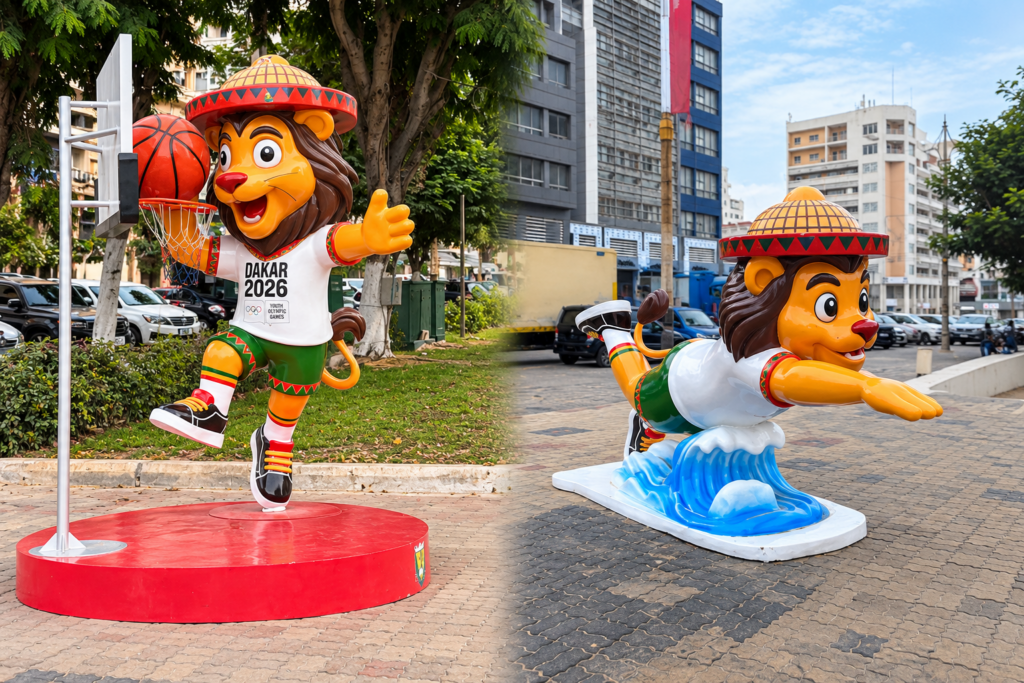
DAKAR, Senegal Oct 30– Africa is taking its place on the Olympic stage in a historic moment for the continent as Dakar hosts the 2026 Youth Olympic Games, bringing the world’s young sporting talent to Senegal for an event that celebrates ambition, diversity and the power of sport to unite people.
The Games, which open on Saturday, October 31, mark the first time an Olympic sporting event has been held on African soil. For Senegal, it is a moment of national pride. For Africa, it is a powerful statement of the continent’s growing role in international sport and its determination to create opportunities for the next generation.
For the next two weeks, Dakar, Diamniadio and Saly will become meeting points for approximately 2,700 athletes aged 14 to 17, representing countries from across the world. They will compete in 25 sports, with 153 medal events, while engaging in activities designed to promote cultural exchange, education and the Olympic values.
But the significance of Dakar 2026 goes well beyond medals and records. It is about a continent opening its doors to the world, showcasing its capabilities and giving young people a platform to dream bigger.
The Games carry the motto, “Africa Welcomes, Dakar Celebrates”, a reflection of Senegal’s celebrated spirit of teranga, a Wolof word associated with hospitality, generosity and warmth. It is an invitation to the world to experience African culture, while creating opportunities for young people to connect through sport.
For decades, Africa has produced exceptional sporting talent, with athletes achieving global recognition in athletics, football, boxing, basketball and other disciplines. Yet the continent has never hosted an Olympic sporting event. Dakar is changing that history, offering a new generation the opportunity to experience the Olympic movement at home.
The event also places Africa’s young people at the heart of a global conversation about inclusion and opportunity. The programme combines elite competition with engagement sports, allowing young people in Senegal and the wider region to discover disciplines they may not ordinarily encounter.
The inclusion of a Youth Refugee Olympic Team is another important feature of the Games. It provides a platform for young athletes affected by displacement to compete and be recognised for their sporting ability, reinforcing the message that talent and ambition can emerge from even the most difficult circumstances.
A legacy beyond the competition
Senegal’s ambition is not simply to stage a successful sporting event, but to use the opportunity to build capacity and create benefits that will remain long after the closing ceremony.
The preparations have involved investment in sporting facilities, improvements to infrastructure and the development of skills among young people. The International Olympic Committee says the Games are designed to support Senegal’s long-term development through sport, education and youth engagement.
In Diamniadio, the Youth Olympic Village is located on a university campus, while existing facilities have been adapted to serve the competition. Organisers have also prioritised the use of existing venues and refurbishment where necessary, rather than relying entirely on new construction. The preparations have created opportunities for young Senegalese to gain experience in event management and operations. The Dakar 2026 Learning Academy, for example, was established to train more than 400 young professionals in the skills required to deliver a major international sporting event.
The Games are also expected to introduce thousands of young people to sport through schools and community programmes. The International Olympic Committee reported that around 300,000 young people were set to experience the event through these initiatives, while volunteer registrations reached close to 23,000 during preparations.
This is an important dimension of the Dakar experience. Beyond the athletes who will compete, there are young people who will gain skills, volunteers who will acquire valuable experience, businesses that will serve visitors and communities that will participate in an international event on their doorstep.
Africa’s sporting ambition
Dakar’s achievement comes at a time when African countries are seeking a greater presence in the organisation of major international sporting events.
Hosting the Youth Olympics demonstrates that African cities can be part of the global sporting calendar not only as sources of athletes and spectators, but also as organisers and hosts of major competitions.
The Games also provide an opportunity to challenge outdated perceptions about Africa’s ability to deliver complex international events. Senegal has brought together national institutions, international sporting bodies, volunteers and local communities to prepare for an occasion of historic significance.
The experience could provide valuable lessons for other African countries seeking to host major competitions, strengthen sporting infrastructure and invest in youth development.
It also offers a reminder that sport is an important tool for bringing people together across national, cultural and social boundaries. In Dakar, young athletes will compete against one another, but they will also share experiences, build friendships and encounter cultures beyond their own.
For Africa, the message is particularly significant. The continent has one of the world’s youngest populations, with enormous potential in sport, innovation, creativity and enterprise. Giving young people access to opportunity, training and international platforms is central to unlocking that potential.
A moment for the next generation
The opening of the Games is therefore more than a ceremonial occasion. It is a celebration of what Africa can achieve when its young people are given the platform, resources and support to participate on the world stage.
Dakar is welcoming the world at a moment when the continent is increasingly asserting its place in global affairs. The athletes arriving in Senegal represent different countries, backgrounds and ambitions, but share a common belief in the possibilities that sport can create.
Their performances will produce winners and champions. Yet the wider success of Dakar 2026 will also be measured by the inspiration it leaves behind, the skills it helps develop and the opportunities it creates for young people across Africa.
When the Games come to an end on November 13, the medals will have been awarded and the international delegations will return home. But Senegal will have made history, and Africa will have demonstrated that it can host the Olympic movement and welcome the world on its own soil.
For a continent whose sporting achievements have long been celebrated around the world, Dakar 2026 represents a new milestone. Africa is not simply participating in Olympic history. It is helping to shape it.
Sharing is caring!