
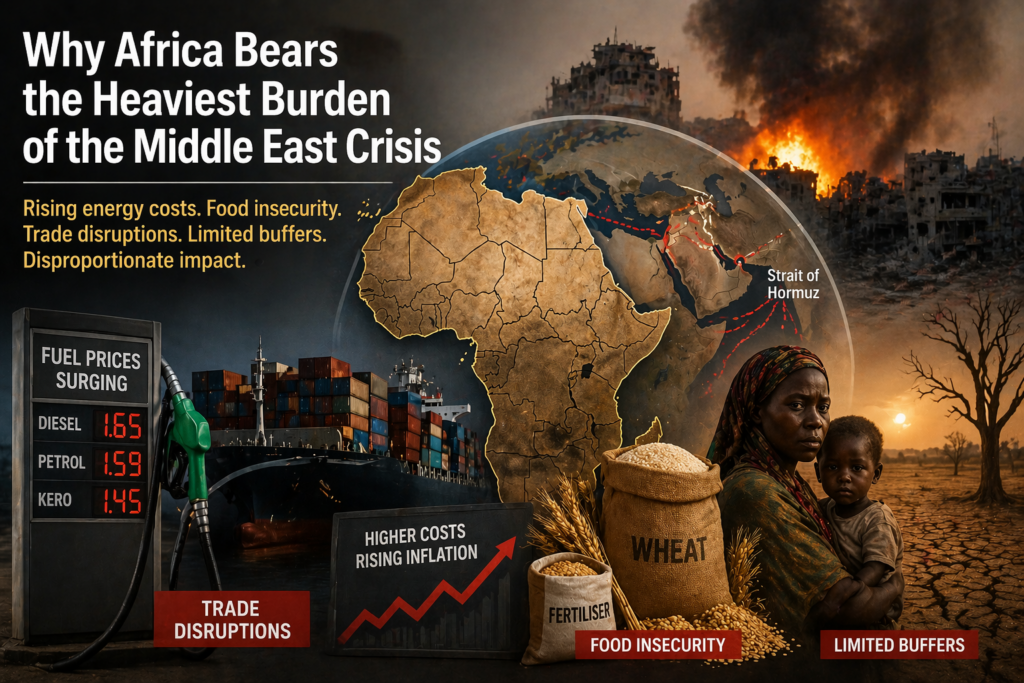
As tensions continue to escalate in the Middle East, the impact is being felt far beyond the region. While global markets react and major powers recalibrate their positions, it is Africa that is emerging as one of the most vulnerable regions—absorbing economic shocks with limited buffers and facing consequences that cut across energy, food security and trade.
One of the most immediate pressures comes from energy. Many African economies are heavily dependent on imported fuel, with a significant portion sourced either directly or indirectly through Middle Eastern supply chains. Any disruption—whether through conflict, sanctions or instability in key transit routes such as the Strait of Hormuz—quickly translates into higher global oil prices. For African countries, this means rising fuel costs, increased transport expenses and a direct impact on inflation. In economies already grappling with high cost of living, even marginal increases in fuel prices ripple through every sector.
Food security is another major concern. The Middle East crisis has implications for global supply chains, particularly in commodities such as wheat and fertiliser. Several African countries rely on imports for staple foods, and disruptions in global trade routes or price volatility can lead to shortages or unaffordable prices. Fertiliser, much of which is linked to energy markets, becomes more expensive, affecting agricultural productivity and threatening future harvests. The result is a cycle where higher input costs today translate into food insecurity tomorrow.
Trade flows are equally exposed. Key shipping routes connecting Asia, Europe and Africa pass through volatile regions. Any instability increases insurance costs, delays shipments and raises the overall cost of doing business. For export-driven economies, this can erode competitiveness, while import-dependent countries face higher costs for essential goods. The Red Sea corridor, for instance, is a critical artery for African trade, and disruptions there have immediate consequences for supply chains across the continent.
Beyond economics, the crisis also carries geopolitical implications. African countries often find themselves navigating complex diplomatic terrain, balancing relationships with Middle Eastern states, Western partners and emerging global powers. This can complicate foreign policy decisions and, in some cases, affect access to aid, investment and trade agreements.
There is also the issue of limited fiscal space. Unlike wealthier economies that can absorb shocks through subsidies or strategic reserves, many African governments operate with constrained budgets. This limits their ability to cushion citizens from rising prices or to stabilise markets during periods of volatility. As a result, external shocks—like those originating from the Middle East—tend to have a more immediate and pronounced impact.
The human cost cannot be ignored. Rising fuel and food prices disproportionately affect low-income households, widening inequality and increasing vulnerability. In some cases, economic strain linked to external shocks can contribute to social unrest, further complicating governance and development efforts.
Ultimately, Africa’s heightened exposure to the Middle East crisis is rooted in structural vulnerabilities: dependence on imports, limited industrial capacity and constrained fiscal flexibility. Addressing these challenges will require long-term strategies focused on energy diversification, regional trade integration and strengthening local production.
For now, however, the reality remains clear. While the Middle East may be the epicentre of the crisis, Africa is among those bearing its heaviest consequences—reminding policymakers that global conflicts rarely remain confined to their point of origin.
Sharing is caring!